
Wise County Probable Cause
Who issues what in Wise County? Virginia Code section 19.2-71 names the judicial officers who may issue criminal process. Under section 19.2-72, a sworn complaint supports the probable-cause decision, which can yield a warrant or, where allowed, a summons. Serving is not issuing. The Wise County Sheriff executes papers without creating them. The magistrate or judge reviews the request, the clerk preserves the court file, and an officer executes the warrant under section 19.2-76. A charge may show in a public case search. The live warrant record may not. Virginia Code section 19.2-72 spells out the complaint rules and what a warrant must contain.
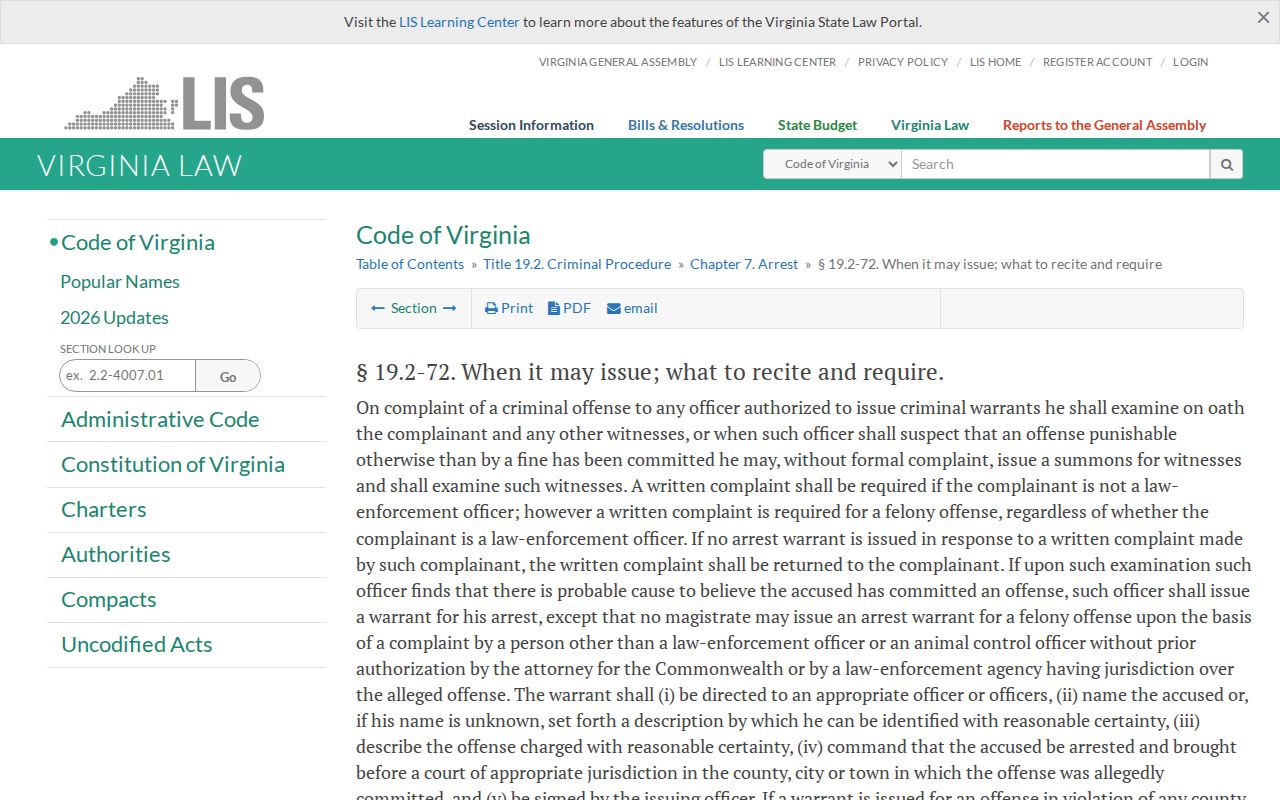
The statute gives Wise County a process outline, not a sample warrant or any listing of wanted individuals.
Wise County Arrest Warrants Explained
An arrest warrant tells an officer to arrest someone and bring that person before a court. In Wise County, Virginia's statewide statutes govern issuance and execution. The county posts no public arrest-warrant roster. It has no online cancellation form either. Which court issues the paper depends on the case type, and a summons is the milder option where the law allows one. Missing a summons brings later process that turns on the charge, the court's finding, and the law that fits. A case result alone never proves an arrest warrant exists.
Wise County Arrest Warrant Authority
Wise County splits its courts by case type. The official Wise Circuit Court page names the 30th Judicial Circuit and the Circuit Clerk as the records contact for felony criminal matters. The GDC handles misdemeanors and felony preliminary hearings. JDR covers assigned adult criminal matters plus protected juvenile and domestic files. No single clerk answers every process question. Use the right court page before calling. The Circuit Clerk's page also carries courthouse access details, including a device-screening policy. Confirm hours and permitted items before an in-person visit. Wise Circuit Court's official page lists the court and clerk information.
Inside a Wise County Arrest Warrant
Wise County posts no sample arrest warrant. Virginia statute and Rule 7C still map the fields. Expect the person's identifier, the charge, the code section or factual basis, and the issuing authority with its date. The rest covers the directed officer, the command to bring the person before a court, and any return or service notes. Actual form language controls.
| Process and case | Warrant, summons, or capias label plus the court case number and jurisdiction. |
|---|---|
| Person and charge | Identifier, offense description, and any cited Virginia Code section. |
| Issuing authority | Authorized judge, clerk, or magistrate; the clerk routes the court file. |
| Command | The order directs an officer to arrest and bring the person before court. |
| Service and return | Date, method, executing agency, and return details if entered. |
| Bail order | Terms are case-specific; no Wise public bond schedule was located. |
Wise County Arrest Warrant Service
Virginia Code section 19.2-76 lets an authorized officer execute criminal process anywhere in Virginia. The Wise County Sheriff's Office lists criminal-warrant service and courthouse security among its duties. Town police can execute process too. Their contact pages are not warrant databases. After an arrest, custody questions go to the jail and bail questions to the court or magistrate. The current SWVRJA contact page lists the Duffield facility. An older county guide differs. Verify by phone before you travel. The regional jail authority's current contact page is for facility routing only.
Serving Arrest Warrants in Wise County
The Sheriff and town police execute process. The issuing court still owns the file. A warrant runs anywhere in Virginia, so geography never changes which court controls it. An arrest may bring booking, an appearance, and a magistrate's bail decision. Wise County has no public surrender scheduler or universal bond window. Ask first. Before any voluntary appearance, check with the clerk or counsel on where to report, what documents to bring, and whether a magistrate will address release.
Summons and Capias Differences
A summons, where allowed, orders an appearance without arrest. A capias or bench warrant follows a missed court obligation. An arrest warrant starts with a probable-cause decision on a complaint. Traffic adds its own boundary. A mere traffic-infraction failure to appear is not automatically a warrant under section 19.2-258.1. Broader noncompliance under section 46.2-938 can bring different court and DMV consequences. The document and later docket entries set the path.
Comparing Arrest, Summons, and Bench Warrants
The labels mark different triggers and commands. They are not interchangeable. A GDC portal case entry may help you find the file, though it will not say which instrument is enforceable right now, and the Wise County bench-warrant process covers the separate missed-obligation route.
| Feature | Arrest Warrant | Summons | Bench Warrant |
|---|---|---|---|
| Command | Arrest and bring before court | Appear at a stated time | Arrest after a missed obligation |
| Basis | Complaint and probable cause | Court chooses appearance process where allowed | Missed setting or court noncompliance |
| Issuer | Authorized judicial officer | Court or magistrate | Court handling the underlying matter |
| Wise route | Issuing clerk, magistrate, Sheriff | Court listed on the paper | Issuing clerk, then magistrate if detained |
Wise County Arrest Warrant Checks
GDC and OCIS can help locate adult case information. Neither offers a complete live warrant flag. Circuit matters go through the Circuit Clerk. JDR information is not an ordinary public online search. If a result worries you, call the Wise County office holding the court file and ask about the exact process and lawful appearance steps. A FOIA request can seek an existing policy or aggregate record. It does not replace a clerk inquiry, investigative and juvenile material may stay restricted, and you should keep any official response with your case papers.
If There's an Arrest Warrant for You
Start with the clerk of the issuing Wise County court, or with your lawyer. Confirm which court signed the warrant. Ask whether counsel can appear for you, where a voluntary surrender takes place, and what identification or case papers to bring. Ask about bail, too. A magistrate may set it later. Do not rely on an unofficial caller or a blank portal result. Once the court acts, ask for an order, receipt, or docket entry showing what changed. The court record and the executing agency's systems may update at different times. A Wise County attorney can pursue a motion to recall or quash the warrant when the facts support it, and the county posts no special form or filing fee for that.
Important: A public docket may not show live process. Confirm the issuing court and ask counsel about appearance or surrender instructions before taking action.